Costs & funding
Company-paid CDL training: compare carrier terms
Get matched with CDL schools or carriers
Which companies pay for CDL training, and what is the commitment?
Compare carrier-run school, apprenticeship and tuition reimbursement as different funding models. The examples below carry individual source-check dates; unknown contract terms remain not published. If you need tuition covered before school, reimbursement after graduation may not solve your cash needs. Read the work commitment, early-exit repayment and housing terms in the actual agreement before signing. These are independent source examples, not partnerships or hiring offers.
Get your state CDL checklist + carrier-paid options
- Free state checklist
- Carrier-paid options
- Email when matching opens in your state

| Your situation | Start with… |
|---|---|
| You need help with upfront costs | Check who pays and when |
| You have a carrier offer | Read repayment and work terms |
| You want to compare carriers | Use the dated program table |
Your next steps
- Compare who pays during each training and work phase.
- Read work commitments, deductions and repayment triggers.
- Get the final agreement before leaving a job or traveling.
Use the CDL funding checker to compare employer training with workforce, VA and college routes.
Start with who pays, and when
Use the CDL cost and payback calculator to budget your own offer without assuming carrier tuition is free.
More about Start with who pays, and when
“Paid CDL training” can mean several things. Two ads can use the same phrase but leave you needing very different amounts of cash.
Start with the published payment models below. Then check the location and agreement for your own offer. The carriers below have their own pages on training or paying back tuition. This does not list who is hiring near you. These companies are not named as partners.
| Model | Money flow | What to establish |
|---|---|---|
| Employer training or apprenticeship | The employer provides or arranges instruction. Employment may begin during training. | Start of employment, pay phases, work commitment and repayment triggers. |
| Sponsored school | A carrier pays or finances a separate provider. | Who holds the debt, whether the job is conditional and who pays if hiring fails. |
| Tuition reimbursement | You pay school first; an employer makes later payments under its policy. | Eligible course, monthly payment, maximum amount and continued-employment conditions. |
Make a short cash-flow list: money due before departure, money needed during the course and money needed until the first paycheck. Include travel, meals, housing and household bills only where you will actually pay them. A reimbursement received months later cannot cover a bill due this week.
Carrier CDL training programs compared
Compare carrier schools, company sponsorship and reimbursement routes below. Each row links to the carrier’s own page and carries its own checked date. Wilson Logistics, Prime, TMC, Knight and Stevens were checked November 17, 2026. Earlier examples retain the check dates shown in their rows. These are independent source examples, not a ranked list, partnerships or confirmed openings.
More about Carrier CDL training programs compared
A carrier school provides instruction; an apprenticeship combines training and work; tuition reimbursement pays eligible school costs back later. Swift’s page describes a financial agreement for Academy costs and tuition reimbursement after one year of employment.
It says Academy attendance is unpaid; its separate Top Gun training is described as paid. Werner’s page mentions tuition reimbursement and school choices, but does not supply the contract terms in this table. Read the actual agreement before treating either model as tuition covered upfront.
Compare the employer and role-specific qualifications before assuming that completing a carrier’s training meets another company’s hiring requirements.
Open table: Carrier-published comparison; source checks dated individually in each row. “Not published” means the checked page did not supply the term.
| Carrier / source | Sponsor type | Commitment length | What triggers repayment | Prorated vs full repayment | Pay during training | Housing |
|---|---|---|---|---|---|---|
| Schneider Checked Its own page separates apprenticeship from tuition reimbursement. | Apprenticeship at carrier facility | not published | not published | not published | Compensation for training time; rate not published | Carrier-funded lodging if applicable; meals included |
| Schneider Checked Qualified drivers receive reimbursement after paying for school. | Tuition reimbursement | not published | not published | not published | not published | not published |
| Roehl Checked Training is part of employment; its agreement uses solo miles. | Carrier-run school | 120,000 solo miles after training (carrier estimates about 15 months) | Training value is a loan; no repayment if training and solo-mile commitment are completed. Early-exit amount and triggers not published | not published | Employee pay from day one; phases have different pay | Lodging and most meals during CDL training |
| Swift Checked Academy costs use a financial agreement; the page distinguishes it from an employment contract. | Carrier academy with tuition reimbursement | No employment contract stated; tuition fully reimbursed after one year of employment | Financial agreement for Academy costs; early-exit balance and triggers not published | not published | No compensation during Academy attendance; later Top Gun training is described as paid, rate not published | Optional housing at an additional $1,250, as published on the checked page |
| Werner Checked Its own page describes Roadmaster and other schools, followed by Werner onboarding after earning a Class A CDL. | School training followed by carrier onboarding; tuition reimbursement mentioned | not published | not published | not published | not published | not published |
| Wilson Logistics Checked Company-sponsored Class A training at its Missouri terminal; training costs are covered after completing one year. | Carrier-run school | One year for training costs to be covered | not published | not published | Paid road training after earning the CDL; pay during CDL prep not published | Lodging during onboarding |
| Prime Inc. Checked Applicants obtain a Class A permit before orientation and then learn with a one-to-one instructor. | Carrier-run training | not published | not published | not published | Compensation during training after passing the CDL exam; pre-CDL pay not published | not published |
| TMC Transportation Checked Its in-house Class A school has no upfront training cost and requires a year driving for TMC after licensing. | Carrier-run school / apprenticeship | One year after earning the CDL | Leaving before the year requires reimbursing some training costs; amount not published | not published | Paid at the training facility and during subsequent road training | Carrier pays accommodations during training |
| Knight Checked Knight CDL Academy teaches applicants without a CDL; tuition uses a financial agreement and later reimbursement if hired. | Carrier academy with tuition reimbursement | If hired: school paid off in 52 weeks; reimbursed after 104 weeks of employment | Enrollment and financial agreements required; early-exit terms not published | not published | Paid road training after hiring; pay during CDL school not published | Applicant pays travel expenses, including lodging |
| Stevens Transport Checked Company-sponsored Class A training has no out-of-pocket training cost; paid finishing follows the CDL course. | Carrier academy and sponsored partner schools | not published | not published | not published | Paid finishing after the CDL course; pay during CDL school not published | Sponsorship could include lodging during school; confirm coverage |
“Not published” means the checked page did not supply the term. Obtain the written agreement for your program and location, including repayment or proration if you quit. A registry location in a state list is not added to this table.
Preparing for the permit? Use the free general knowledge practice test with your state manual.
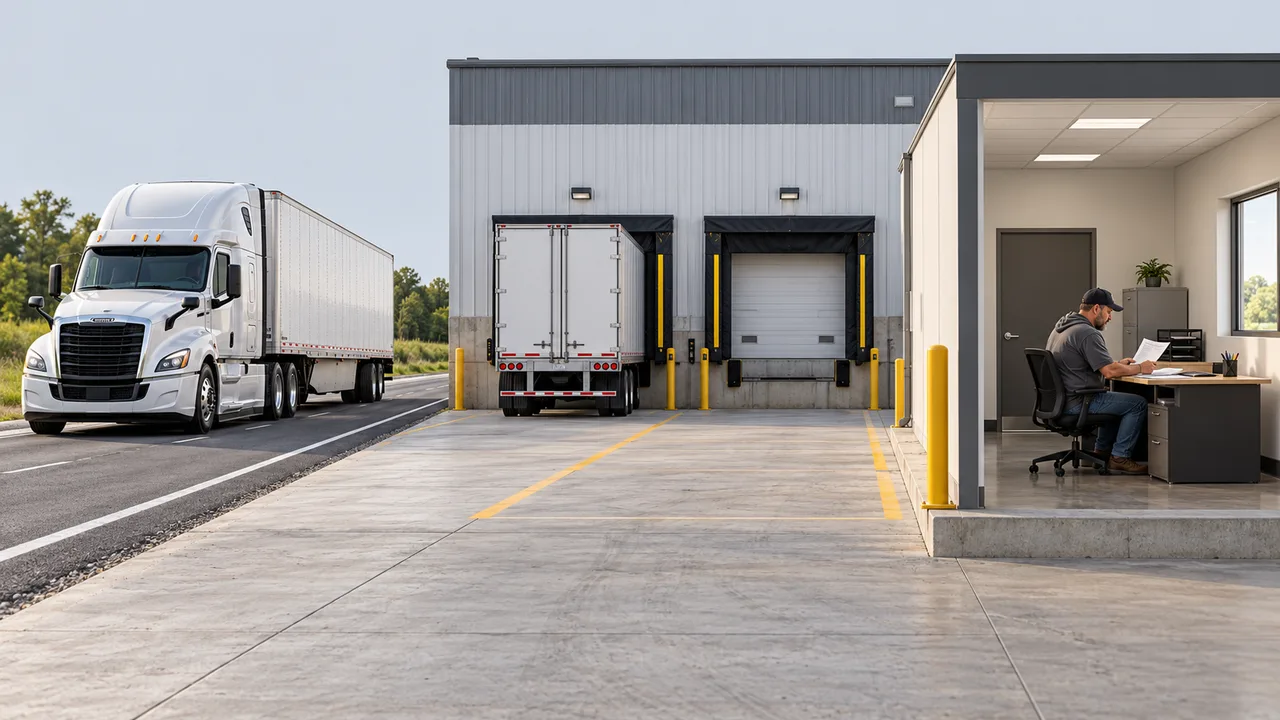
Look at the whole workday, not one rate.
Concept workday illustration. These activities do not have a universal pay rate or payment rule; ask the employer for its written compensation terms.
01Paid driving miles
Ask which miles count, how they are measured and what happens to empty miles. A higher cents-per-mile rate can still produce lower weekly pay if paid mileage is lower.
02Dock and waiting time
Ask when detention or other accessorial pay starts, how it is documented and whether there are caps or exclusions. Do not assume every hour is included in a mileage quote.
03Paperwork and other duties
Include the actual time needed for inspections, paperwork and other work when comparing offers. Clarify the pay treatment in the offer, rather than substituting an advertised maximum.
Follow each training and pay phase
Look beyond the weekly or yearly figure in an ad. Write down when each stage starts and ends. Include permit prep, CDL school, skills tests, orientation, driving with a trainer and solo work. Some stages may overlap. Others may have different pay rules.
- Before employment: which permit, medical, screening and travel costs are yours?
- During school: are you an employee, and is pay hourly, daily or another stated arrangement?
- During trainer driving: what determines pay and what deductions apply?
- After release to solo: how are paid miles, other work and bonuses calculated?
- Between stages: who pays for delays, accommodation or another skills-test appointment?
Ask when you can expect the first paycheck. Get deductions explained in writing. Use the pay-offer worksheet to compare your own scenarios. An advertised limit, bonus or top earner’s pay does not guarantee your first-year income.
Read the repayment agreement before signing
If I quit early
Roehl’s published page describes training value as a loan that is not repaid after completing training and the solo-mile commitment. It does not publish the early-exit balance or whether it prorates. Schneider’s checked page does not publish a repayment formula.
More about Read the repayment agreement before signing
If your offer instead has a 12-month commitment, ask whether leaving in month 11 creates the full balance or a reduced one; that example is a question, not a published carrier term. Use the individually dated rows above, then obtain your actual agreement.
This is not legal advice.
Find the clause that creates an obligation, the amount or calculation, the events that trigger it and the point at which it is satisfied. Ask whether the obligation decreases as you work or remains unchanged until a threshold is reached. If the contract uses miles, ask which miles count.
Ask separately about voluntary resignation, dismissal, medical ineligibility, a failed test and not being offered a driving assignment. A single answer to “what if I quit?” does not explain every outcome. Confirm whether a different company administers a loan or collects a balance.
Also identify refund rules for the school itself. A school’s cancellation policy and an employer’s training-repayment provision can be separate obligations. If the consequences are unclear or substantial, have a qualified adviser explain the agreement before signing.
Compare offers on the same sheet
Put an independent-school quote beside a carrier offer. Include the exact license class and test equipment, personal driving time, travel, expected time away from paid work, employment conditions and worst-case amount owed. A lower up-front payment may be worthwhile, but it does not answer whether the attached job fits your life.
More about Compare offers on the same sheet
Ask about the actual driving role: local, regional or over the road; required residence; time away from home; available shifts; and how a driver moves to another assignment. Keep verbal preferences separate from written commitments. An employer that trains drivers may still have applicant requirements and hiring limits.
Check the provider’s location and training type in the FMCSA registry. The registry covers federal training rules. It does not promise wages, employer quality, funding or the money terms in your contract.
Questions to ask before you sign
Keep the answers with the agreement. If a key term is unknown, mark it unknown. Do not fill the gap with a recruiter’s estimate.
States with official program location evidence
These 16 state pages have at least one listed carrier whose official page identifies a CDL training location or student hiring area in that state. Each page cites the evidence and its checked date. A training center in a state does not establish that every resident qualifies, that enrollment is open, or that a carrier is a partner.
More about States with official program location evidence
We have not established qualifying official evidence for Alabama, Alaska, Arkansas, Colorado, Connecticut, Delaware, District of Columbia, Florida, Hawaii, Kansas, Kentucky, Louisiana, Maine, Maryland, Massachusetts, Michigan, Minnesota, Mississippi, Montana, Nebraska, Nevada, New Hampshire, New Jersey, New Mexico, New York, North Carolina, North Dakota, Oklahoma, Oregon, Rhode Island, South Dakota, Vermont, Washington, West Virginia, Wyoming.
Those states do not have a carrier-paid page in this guide. This is a limit of our checked evidence, not a statement that no programs exist there.
- Arizona
- California
- Georgia
- Idaho
- Illinois
- Indiana
- Iowa
- Missouri
- Ohio
- Pennsylvania
- South Carolina
- Tennessee
- Texas
- Utah
- Virginia
- Wisconsin
Questions drivers ask
Does this page find a company near me that will pay for a CDL?
No. It does not sort carriers by distance and it does not name a company that has offered to pay for school near a ZIP code. A registry location on a state list is a training-provider record, not an offer to pay.
Is company-paid CDL training really free?
It can remove or reduce the tuition you pay at enrollment, but the agreement may attach a work commitment or repayment obligation. Ask what you owe if you withdraw, fail to complete training or leave employment. Read the signed agreement rather than relying on the word free.
Do all programs pay wages while I get my CDL?
Programs use different pay models. Check when the job starts and which training stages are paid. Ask the rate for each stage and which bills you pay before the first paycheck.
Is tuition reimbursement the same as paid school?
No. Reimbursement generally means you pay a school first and receive payments later if you meet the employer’s conditions. Check the monthly amount, maximum total, eligible school and what happens when employment ends.
Does a pre-hire letter guarantee a job?
Treat it as conditional until you have read its terms. Ask which licensing, medical, screening, location and hiring conditions remain and what happens to training charges if employment does not begin.
Can I choose local driving after company training?
The license does not decide which jobs a carrier will offer you. Before enrolling, check the role, area, schedule and home time. Ask about any conditions for moving to a different role.
Sources and scope
Source links, check date and scope
Sources checked Nov 3, 2026. Federal baselines and named state examples are distinguished in the article. Your licensing agency and written program terms govern your case.
- Schneider: official training terms
- Roehl: official training terms
- Swift: official training terms
- Werner: official training terms
- Wilson Logistics: official training terms
- Prime Inc.: official training terms
- TMC Transportation: official training terms
- Knight: official training terms
- Stevens Transport: official training terms
- FMCSA: selecting a registered training provider
Prepared by CDLP editorial from the sources above. No independent instructor, legal or financial review is claimed.
Get your state CDL checklist + carrier-paid options
- Free state checklist
- Carrier-paid options
- Email when matching opens in your state
Keep planning your next step.
All resources
What does CDL training really cost?
Published program charges, extra fees and a worksheet for comparing written quotes.
Read guide
Truck driver salary: data and a pay-offer calculator
Use current BLS wage data correctly, compare mileage and hourly offers, and ask better questions about paid miles, waiting time, deductions and home time.
Read guide
How to choose a CDL school: compare training and costs
Check the provider, individual driving practice, test vehicle, total price, schedule and contract before choosing a CDL training program.
Read guide