Licenses & endorsements
CDL requirements
What are the federal CDL requirements?
If you are applying for a first CDL, start with the commercial learner’s permit, applicable entry-level training, the 14-day permit hold and the three-part skills test. If age is your concern, separate the federal permit age of 18 from the motor-carrier qualification age of 21, except as subpart G provides. If you need an issuance age or fee, use the state’s own licensing page. FMCSA sets federal requirements; the state issues the license.
Get your state CDL checklist + carrier-paid options
- Free state checklist
- Carrier-paid options
- Email when matching opens in your state
Try the free cdl permit practice test. Study the explanations, then check your state manual.
| Your situation | Start with… |
|---|---|
| You need your first CDL | Follow the permit-to-test steps |
| You are under 21 | Check age and work limits |
| You need state documents or fees | Find your state’s licensing page |
Use the CDL readiness quiz to organize these requirements into a personal plan with conditional dates.
If your question involves a criminal record, separate licensing from admission and employment using getting a CDL with a felony. To check medical certification, read the DOT physical and medical card guide.
What the federal page says you do
FMCSA’s page, last updated December 8, 2025, says getting a commercial driver’s license includes medical rules and residency requirements besides knowledge and skills. It tells you to start with your state’s CDL manual, then choose the vehicle and the kind of driving. There are three classes, and endorsements cover specialized work. Some applicants must finish entry-level driver training before the skills test, or before the hazardous-materials knowledge test.
More about What the federal page says you do
Before employer screening, distinguish the DOT drug-testing process from the employer’s Clearinghouse query and your consent.
The same page then lists three steps:
- Get the commercial learner’s permit. It authorizes practice on public roads with a qualified CDL holder beside you. The state checks the driving record for the last 10 years in all 50 states and the District of Columbia. You bring the proof of medical qualification the state accepts. Most commercial driving requires a DOT medical card. The state may also require documents for your name and residency. There are fees. The page does not print a national fee.
- Complete entry-level driver training when it applies. A driver applying for a Class A or Class B CDL for the first time, whose permit is issued on or after February 7, 2022, must complete that training with a registered provider before testing. The page says there is no federal requirement to finish the theory training before you apply for the permit. The drivers page, last updated February 4, 2026, also names an upgrade from Class B to Class A and a first school bus, passenger, or hazardous-materials endorsement. Read the ELDT guide for the training split.
- Get the CDL. You must hold the permit for 14 days and finish applicable entry-level training before the skills test. You must pass the vehicle inspection, the basic controls test, and the road test. Passing the test is not guaranteed. Some states hand you the card the same day. Others mail it. FMCSA does not issue the license.
Checked October 29, 2026: FMCSA, how do I get a commercial driver’s license. The skills test guide and the class comparison cover the test parts and the vehicle groups.
Age, language, one license, and the medical rule
49 CFR 383.25(a)(4), opened October 29, 2026, says the commercial learner’s permit holder must be 18 years of age or older. That is a condition for the permit to count as a valid CDL for behind-the-wheel training on public roads.
More about Age, language, one license, and the medical rule
The same section also requires a qualified CDL holder in the front seat, or in the first row behind the driver of a passenger vehicle, a license from the same jurisdiction, a passed general knowledge test, and a 14-day wait before the skills test.
The age clauses are collected on CDL age requirement.
If blood pressure is your concern, use the official certification guidance and its limits to prepare questions for the examiner.
49 CFR 391.11(b)(1), opened the same day, says a person is qualified to drive a commercial motor vehicle under that part if the person is at least 21 years old, except as subpart G provides.
That is a motor-carrier qualification rule. It is not a sentence that every state issues every CDL at 21. The section also requires the person to read and speak English well enough to converse with the public, understand highway signs and signals, respond to official inquiries, and make entries on reports and records.
The person must hold a currently valid commercial license issued by only one state or jurisdiction, be physically qualified under subpart E, and not be disqualified under 49 CFR 391.15. This page does not restate the 391.15 offenses.
The medical card is the part most applicants meet with a DOT physical. The DOT physical guide covers that exam. The eligibility check compares answers with the federal rules in the browser. It does not store the answers and it does not issue a license.
For domicile and document questions, use the non-domiciled CDL rule and document guide, then ask your state which current issuance rules apply before paying for training.
A wage estimate is not a license requirement. Houston’s metro wage page prints BLS employment and pay for truck-driver occupations. It does not issue a CDL and it does not list a job.
Where a state prints its own age and fees
A state page on this site is published only after an official licensing page was opened. The age and the fees on that page are the ones that source printed. They are not copied here.
For study material, find your state’s official CDL handbook and check its current edition before practicing.
- CDL requirements in Alabama
- CDL requirements in Alaska
- CDL requirements in Arizona
- CDL requirements in Arkansas
- CDL requirements in California
- CDL requirements in Colorado
- CDL requirements in Connecticut
- CDL requirements in Delaware
- CDL requirements in District of Columbia
- CDL requirements in Florida
- CDL requirements in Georgia
- CDL requirements in Idaho
- CDL requirements in Illinois
- CDL requirements in Indiana
- CDL requirements in Iowa
- CDL requirements in Kansas
- CDL requirements in Kentucky
- CDL requirements in Louisiana
- CDL requirements in Maine
- CDL requirements in Maryland
- CDL requirements in Massachusetts
- CDL requirements in Michigan
- CDL requirements in Minnesota
- CDL requirements in Mississippi
- CDL requirements in Missouri
- CDL requirements in Montana
- CDL requirements in Nebraska
- CDL requirements in Nevada
- CDL requirements in New Jersey
- CDL requirements in New York
- CDL requirements in North Carolina
- CDL requirements in North Dakota
- CDL requirements in Ohio
- CDL requirements in Oklahoma
- CDL requirements in Oregon
- CDL requirements in Pennsylvania
- CDL requirements in South Carolina
- CDL requirements in South Dakota
- CDL requirements in Tennessee
- CDL requirements in Texas
- CDL requirements in Utah
- CDL requirements in Vermont
- CDL requirements in Virginia
- CDL requirements in Washington
- CDL requirements in West Virginia
- CDL requirements in Wisconsin
- CDL requirements in Wyoming
States without an opened fee page stay on the state index. Their fees are not estimated. The step-by-step route is how to get a CDL.
Questions drivers ask
Does FMCSA issue a CDL?
No. The FMCSA page updated December 8, 2025 says state governments issue commercial driver’s licenses. FMCSA sets the standards the state applies.
Is 21 the CDL age in every state?
49 CFR 391.11(b)(1) says a driver covered by that part must be at least 21, except as subpart G provides. 49 CFR 383.25(a)(4) says a commercial learner’s permit holder must be 18 or older. A state’s own issuance age is printed on that state’s page only when an official source was opened. This page does not copy one state’s age onto another.
Do I finish entry-level training before I apply for the permit?
FMCSA’s December 8, 2025 page says there is no federal requirement to complete entry-level theory training before you apply for a commercial learner’s permit. A first Class A or Class B applicant whose permit is issued on or after February 7, 2022 must finish that training with a registered provider before the skills test.
How long do I hold the permit before the skills test?
49 CFR 383.25(e) says the permit holder is not eligible for the CDL skills test in the first 14 days after the permit is first issued. FMCSA also says you must pass the vehicle inspection, the basic controls test, and the road test.
Sources and scope
Source links, check date and scope
Sources checked Oct 29, 2026. Federal baselines and named state examples are distinguished in the article. Your licensing agency and written program terms govern your case.
- FMCSA: how do I get a commercial driver’s license?
- FMCSA: drivers
- 49 CFR 383.25: commercial learner’s permit
- 49 CFR 391.11: general qualifications of drivers
Prepared by CDLP editorial from the sources above. No independent instructor, legal or financial review is claimed.
Get matched with CDL schools near you
Get your state CDL checklist + carrier-paid options
- Free state checklist
- Carrier-paid options
- Email when matching opens in your state
Keep planning your next step.
All resourcesHow to get a CDL, step by step
Choose a license, prepare for the permit, understand ELDT and get ready for the skills test.
Read guide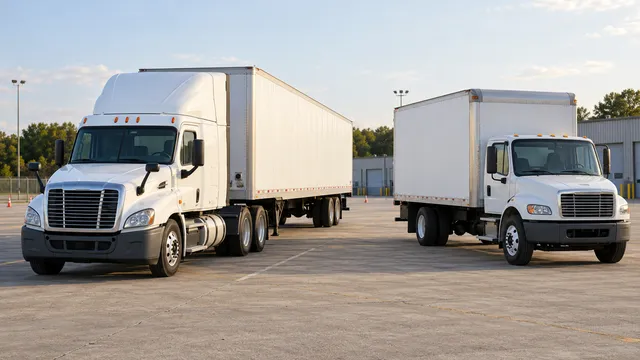
Class A vs Class B CDL: which license do you need?
A vehicle-based comparison, with endorsements and restrictions explained separately.
Read guideCDL age: 18, under 21 and interstate
Use the age decision table and sourced state minimums before planning training or driving work.
Read guide